

Senator Ned Nwoko has urged political supporters in Delta North to avoid premature celebration over the reported victory of former Delta State Governor Ifeanyi Okowa in the APC senatorial contest, insisting that only the party’s national leadership can make an official declaration.
The dispute has turned a local party exercise into a wider argument about procedure, legitimacy and the future political direction of Anioma. At the centre of the controversy is Nwoko’s position that partial or unofficial figures should not be treated as final results before the All Progressives Congress completes its formal process.
Why Ned Nwoko Is Rejecting Early Celebration
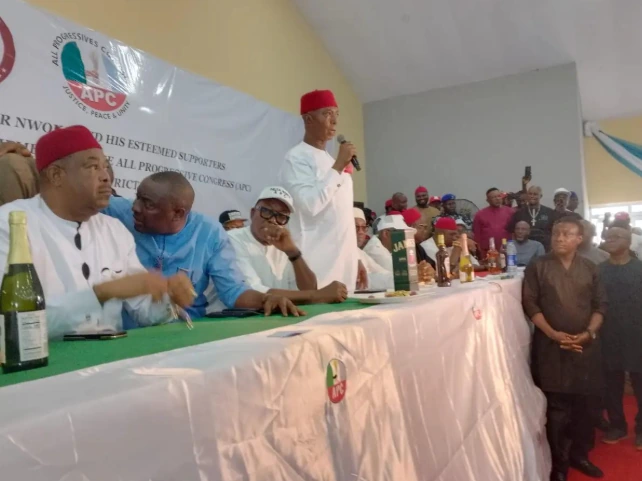
Nwoko’s camp argues that any result not announced by the APC national headquarters in Abuja remains incomplete. According to the statement issued through Tonnie Oganah, Media Director of the Anioma state creation campaign, the official outcome must come from the recognised national structure of the party and be signed by the appropriate leadership.
The warning was aimed at supporters already celebrating Okowa as the winner. Nwoko’s team described such celebration as misleading because different aspirants had areas of strength, and selective results could create a distorted picture of the contest.
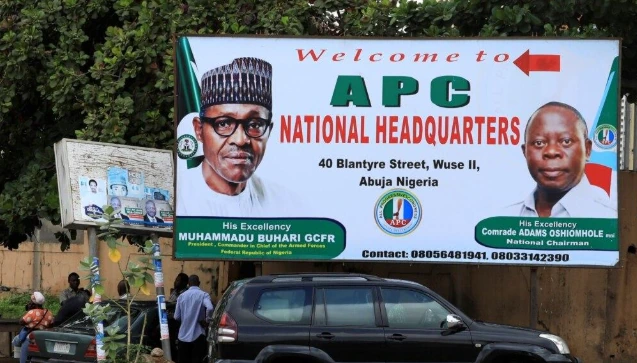
The message was not framed only as a complaint about numbers. It was also presented as a legal and party-procedure issue. Nwoko’s camp maintained that the APC has no factional authority outside its recognised national leadership, making any unofficial declaration politically risky.
The Anioma State Question Behind the Contest
The Delta North race is not only about who carries the APC ticket. Nwoko has tied his political campaign to the push for Anioma state creation, presenting it as a question of identity, representation and long-term development.
His argument is that a separate Anioma state would increase political representation for the region. Instead of having one senator and three House of Representatives members within the current Delta structure, Anioma would potentially have broader federal representation if state creation became reality.
That position explains why Nwoko’s response to the reported result sounded bigger than a normal primary dispute. For his camp, losing the ticket would not only be a personal political setback. It would also weaken the platform through which he has been pushing the Anioma state agenda.
Nwoko’s Message to Anioma Voters
Nwoko’s statement also appealed directly to Anioma voters, warning them not to trade what he described as a larger political future for short-term inducements or narrow benefits. His camp argued that the region should think beyond immediate campaign promises and consider what stronger representation could mean over time.
The language was sharp, especially where the statement suggested that Anioma people should not abandon their future for “crumbs” offered by rival candidates. That line shows how emotionally charged the contest has become, with both political loyalty and regional identity placed at the centre of the debate.
Nwoko also connected his campaign to President Bola Tinubu and the APC, saying he had supported both before many others in Delta politics moved in that direction. His position is that Anioma voters would eventually reward that alignment by backing the APC in future elections.
Party Membership and Eligibility Questions
Another part of Nwoko’s argument focused on party membership and eligibility. His camp said the APC must consider more than raw political popularity when deciding who can validly fly the party’s flag.
The statement raised questions about resignation from a former political party before joining a new one. It argued that evidence of proper resignation matters under electoral rules and party procedure, especially because simultaneous membership of more than one political party is not allowed.
This part of the argument appears designed to challenge not only the result narrative, but also the political process behind Okowa’s reported emergence. Nwoko’s camp is effectively saying that the APC should review legal, procedural and reputational issues before finalising any candidate.
What This Means for Delta North Politics
The disagreement leaves Delta North APC politics in a tense position. Okowa’s supporters are treating the contest as settled, while Nwoko’s camp is insisting that the official process has not been completed.
For ordinary voters, the key issue is clarity. Party primaries are often shaped by internal rules, delegate structures, appeal processes and national confirmation. Until the APC’s recognised authority makes a final declaration, rival camps can continue to frame the outcome differently.
The deeper issue is whether the APC in Delta North can manage the dispute without weakening its 2027 campaign structure. If the disagreement continues, it could create internal divisions before the general election season fully begins.
The Practical Reading of Nwoko’s Position
Nwoko’s warning should be read as both a procedural objection and a political signal. Procedurally, he wants the APC national leadership to be treated as the only valid source of final results. Politically, he is reminding supporters that his campaign is tied to the Anioma state creation agenda, not only to a senatorial ticket.
That makes the dispute more complex than a simple winner-versus-loser story. It is also a test of how the APC handles internal competition, high-profile defectors, regional ambition and candidate legitimacy ahead of 2027.
For now, Nwoko’s camp is asking supporters to wait for the party’s official word rather than accept celebrations as proof of victory.